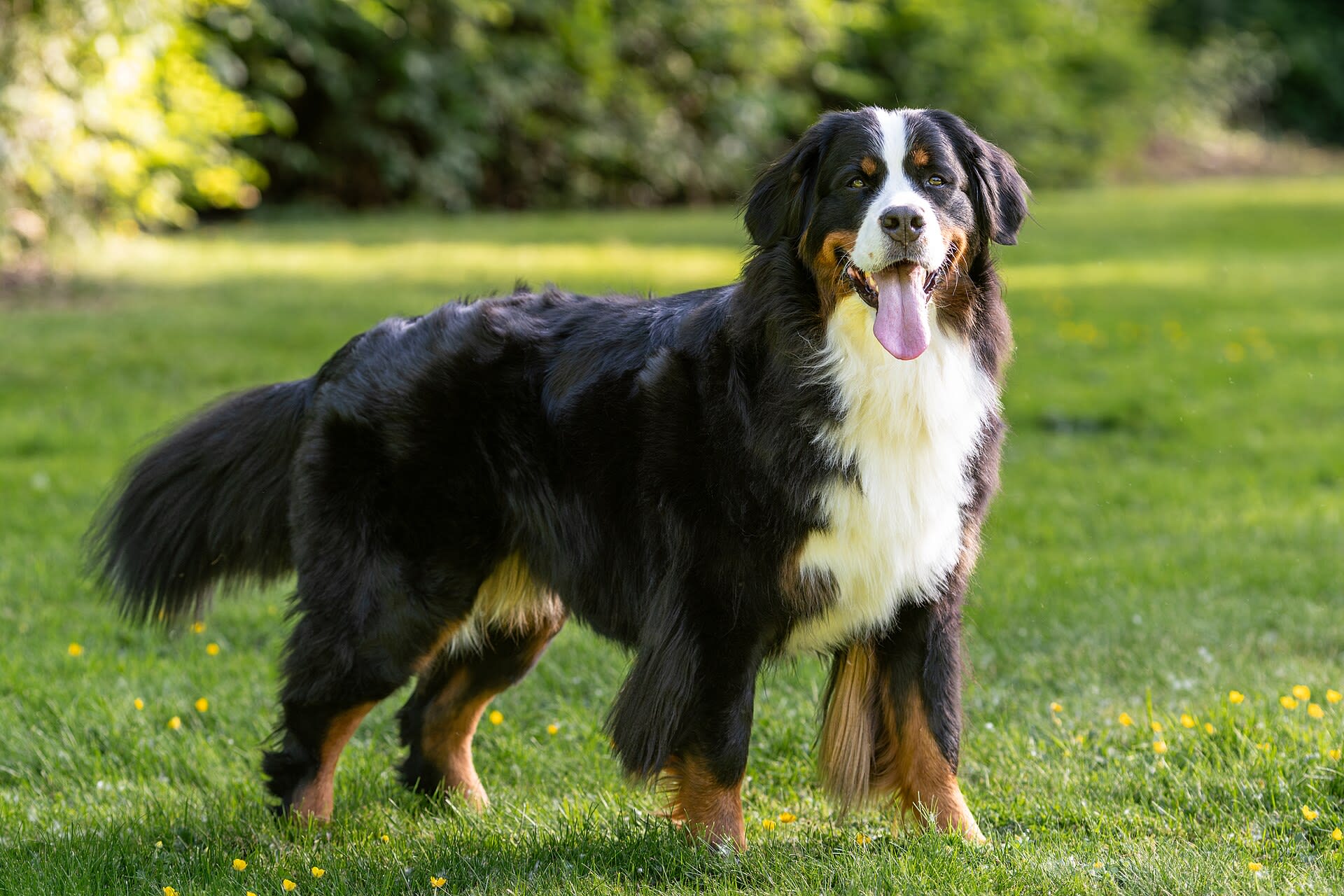
Photo: FriendlyToaster, CC BY 4.0, via Wikimedia Commons
Breed guide
Bernese Mountain Dog
A large, sweet-natured Swiss farm dog with a tri-colour coat, a calm manner and a shorter-than-average lifespan.
Published by Admin · Updated
- Size
- large
- Weight
- 70–115 lb
- Height
- —
- Lifespan
- 7–10 years
- Gentle
- Calm
- Loyal
At a glance: Large (70 to 115 lb) · Moderate energy · Kids: excellent · 7 to 10 years · Grooming: brush several times a week, heavy shedding
Temperament
Bernese Mountain Dogs are famously gentle, patient and devoted to their families, and they usually get along with children and other pets. They are happiest close to their people and can become sad if left alone for long periods. Their size means they need training in good manners while they are still puppies.
Daily life
A Bernese enjoys moderate daily exercise such as walks and hikes, and they are less suited to very hot weather because of their thick coat. Avoid hard exercise on hot days and with young puppies whose joints are still growing. Expect a lot of shedding and plan to brush often.
Health to watch
The breed has a shorter lifespan than many dogs and is prone to some cancers, joint problems such as hip and elbow dysplasia, and bloat. Learn the signs of bloat, keep your dog lean and ask about family health history. Choose a vet who understands large-breed care.
Rescue note
Berners that reach rescue are often adults whose owners could not manage the size, shedding or vet bills. They repay a calm, loving home with immense devotion.
General information, not veterinary advice.
Health notes
The breed has a shorter lifespan than many dogs and is prone to some cancers, joint problems such as hip and elbow dysplasia, and bloat. Learn the signs of bloat, keep your dog lean and ask about family health history. Choose a vet who understands large-breed care.
Bernese Mountain Dog FAQ
How big does a Bernese Mountain Dog get?
Adult Bernese Mountain Dogs typically weigh about 70 to 115 lb (roughly 32 to 52 kg), depending on the individual dog, its sex and its build.
How long do Bernese Mountain Dogs live?
Bernese Mountain Dogs typically live about 7 to 10 years. Good veterinary care, a healthy weight, exercise and genetics all play a part.
How much exercise does a Bernese Mountain Dog need?
A Bernese enjoys moderate daily exercise such as walks and hikes, and they are less suited to very hot weather because of their thick coat. Avoid hard exercise on hot days and with young puppies whose joints are still growing.
What health problems should I watch for in a Bernese Mountain Dog?
The breed has a shorter lifespan than many dogs and is prone to some cancers, joint problems such as hip and elbow dysplasia, and bloat. Learn the signs of bloat, keep your dog lean and ask about family health history. This is general information, not veterinary advice — ask your vet about your own dog.