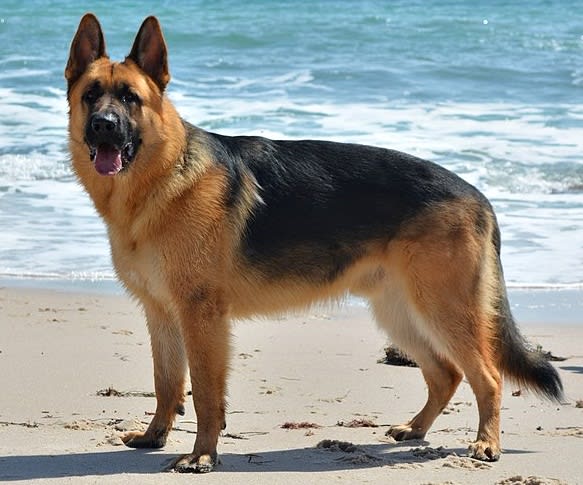
Photo: gomagoti, CC BY-SA 2.5, via Wikimedia Commons
Breed guide
German Shepherd
Confident, loyal and very intelligent — a protective family dog that thrives on training and purpose.
Published by Admin · Updated
- Size
- large
- Weight
- 50–90 lb
- Height
- —
- Lifespan
- 9–13 years
- Confident
- Loyal
- Intelligent
At a glance: Large (50 to 90 lb) · High energy · Kids: with supervision · 9 to 13 years · Grooming: brushing several times a week, heavy shedding
Temperament
German Shepherds are confident, loyal and very intelligent. They form a strong bond with their family and are naturally protective. Early socialisation is essential so that watchfulness does not turn into fear or reactivity.
Daily life
Expect at least one to two hours of exercise and daily training or job-like tasks, such as scent games, obedience or running. They do best with a confident, consistent owner and a family that includes them in daily life. Supervise play with young children, as a large, herding-minded dog may bump or nip.
Health to watch
Hip and elbow dysplasia, a nerve disease called degenerative myelopathy, bloat (a life-threatening twisting of the stomach) and digestive issues. Feed smaller meals and avoid hard exercise right after eating.
Rescue note
Many GSDs are surrendered as adolescents when energy, shedding or protectiveness prove too much. Good training classes and clear rules change a lot.
General information, not veterinary advice.
Health notes
Hip and elbow dysplasia, a nerve disease called degenerative myelopathy, bloat (a life-threatening twisting of the stomach) and digestive issues. Feed smaller meals and avoid hard exercise right after eating.
German Shepherd FAQ
How big does a German Shepherd get?
Adult German Shepherds typically weigh about 50 to 90 lb (roughly 23 to 41 kg), depending on the individual dog, its sex and its build.
How long do German Shepherds live?
German Shepherds typically live about 9 to 13 years. Good veterinary care, a healthy weight, exercise and genetics all play a part.
How much exercise does a German Shepherd need?
Expect at least one to two hours of exercise and daily training or job-like tasks, such as scent games, obedience or running. They do best with a confident, consistent owner and a family that includes them in daily life.
What health problems should I watch for in a German Shepherd?
Hip and elbow dysplasia, a nerve disease called degenerative myelopathy, bloat (a life-threatening twisting of the stomach) and digestive issues. Feed smaller meals and avoid hard exercise right after eating. This is general information, not veterinary advice — ask your vet about your own dog.