Photo: Lilly M, CC BY-SA 2.5, via Wikimedia Commons
Breed guide
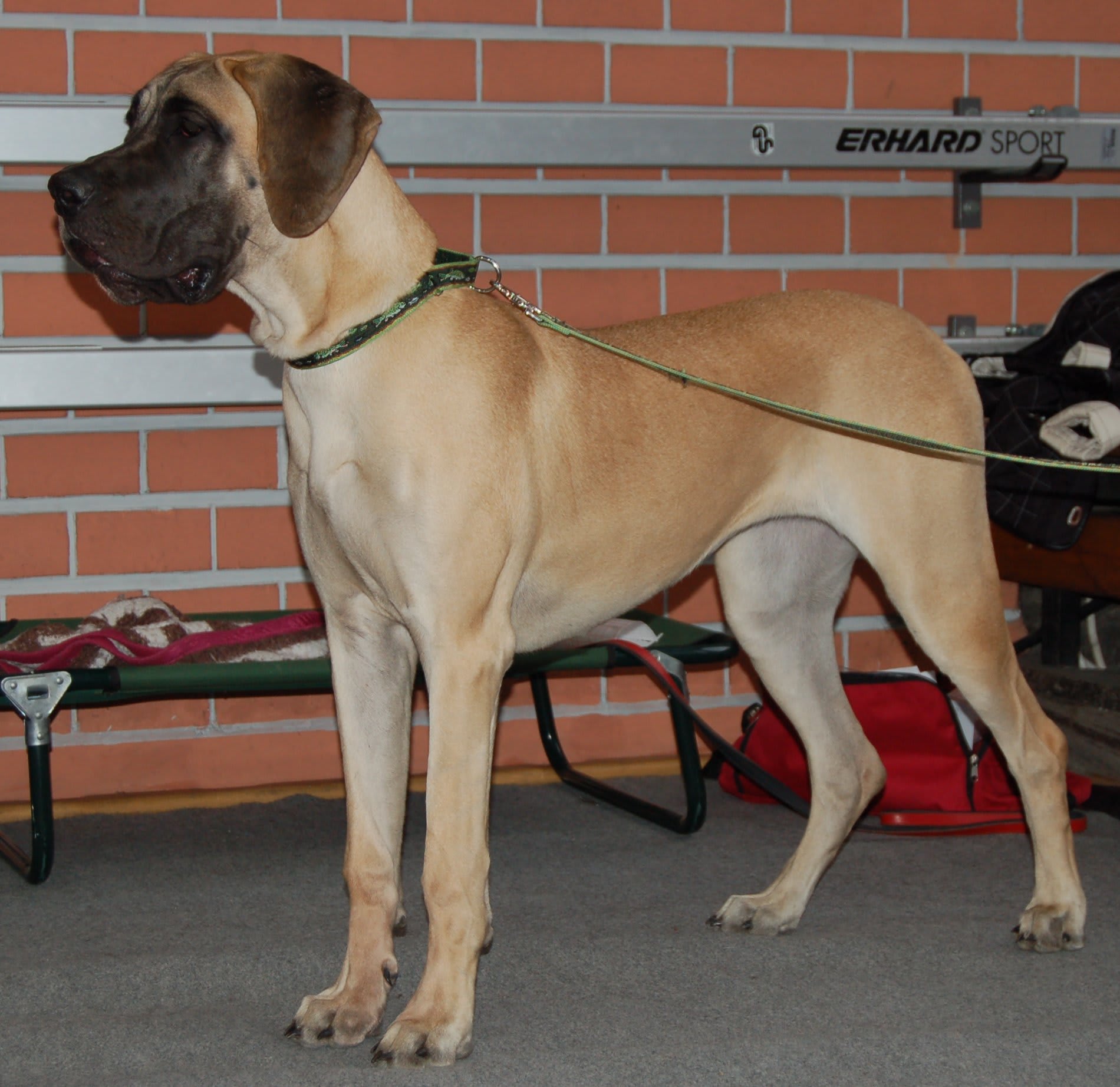
Great Dane
A gentle giant: calm and affectionate, with big food, space and vet costs.
Published by Admin · Updated
- Size
- giant
- Weight
- 110–175 lb
- Height
- —
- Lifespan
- 7–10 years
- Gentle
- Calm
- Affectionate
At a glance: Giant (110 to 175 lb) · Calm energy · Kids: with supervision · 7 to 10 years · Grooming: low, weekly brushing
Temperament
Great Danes are gentle giants: calm, affectionate and often convinced they are lap dogs. They are usually good with children and other pets, but their size means an excited tail or a leaning hug can knock over a toddler.
Daily life
They need daily walks and room to stretch, but not extreme exercise, and puppies should avoid hard running and jumping while their bones are growing. Expect big food, vet and medication costs, a large car, and drool. A raised feeder and smaller meals can help reduce bloat risk.
Health to watch
Bloat (a life-threatening stomach twist), dilated cardiomyopathy (heart disease), wobbler syndrome, hip dysplasia and bone cancer. Learn the signs of bloat, such as a swollen belly, retching and restlessness, and go to a vet straight away.
Rescue note
Danes are often surrendered when owners underestimate their cost and space needs. Their short lifespan is something adopters should be ready for.
General information, not veterinary advice.
Health notes
Bloat (a life-threatening stomach twist), dilated cardiomyopathy (heart disease), wobbler syndrome, hip dysplasia and bone cancer. Learn the signs of bloat, such as a swollen belly, retching and restlessness, and go to a vet straight away.
Great Dane FAQ
How big does a Great Dane get?
Adult Great Danes typically weigh about 110 to 175 lb (roughly 50 to 79 kg), depending on the individual dog, its sex and its build.
How long do Great Danes live?
Great Danes typically live about 7 to 10 years. Good veterinary care, a healthy weight, exercise and genetics all play a part.
How much exercise does a Great Dane need?
They need daily walks and room to stretch, but not extreme exercise, and puppies should avoid hard running and jumping while their bones are growing. Expect big food, vet and medication costs, a large car, and drool.
What health problems should I watch for in a Great Dane?
Bloat (a life-threatening stomach twist), dilated cardiomyopathy (heart disease), wobbler syndrome, hip dysplasia and bone cancer. Learn the signs of bloat, such as a swollen belly, retching and restlessness, and go to a vet straight away. This is general information, not veterinary advice — ask your vet about your own dog.